Being Comfortable in Your Uncomfortableness by Dr. Mary Hancock- Podcast “Real Talk with Dr. Hancock”
Being Comfortable in Your Uncomfortableness by Dr. Mary Hancock- Podcast “Real Talk with Dr. Hancock”
From the moment we are born, expectations begin shaping us. We are told what to do, shown how to behave, and guided—sometimes subtly, sometimes forcefully—into roles defined by our homes, schools, communities, and cultures. Very few people are given the freedom to fully decide who they want to be without influence. Those who are often must develop resilience early, learning through trial, error, and inner strength rather than direction.
Most of us, however, grow by absorbing what surrounds us. We learn what is acceptable, what is rewarded, and what is discouraged. For some, older siblings pave the way—experiencing consequences, earning praise, or facing reprimand—allowing younger siblings to observe and choose different paths. It is fascinating how people raised in the same household, by the same parents, eating the same meals, can emerge with completely different perspectives, values, and “life lenses.”
Many people endure significant hardship—what some might describe as “hell”—yet still develop resilience despite the weight of those experiences. Over time, each of us learns how to fit into the roles assigned to us or the ones we assume for survival. Parents often recognize these patterns early: the rambunctious child, the quiet observer, the natural leader, the peacemaker. Yet beyond these labels lies a deeper truth—our circumstances do not have to determine our destiny.
Those who understand this begin to grasp the power of the mind. They recognize that growth requires self-awareness: the ability to see oneself clearly, acknowledge shortcomings, and accept that both success and failure are teachers. These individuals understand they are not fixed or limited. They learn to apply intention, discipline, and reflection to their lives. This is where the real work begins.
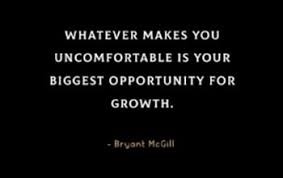
Being comfortable in your uncomfortableness means facing who you are without avoidance. It means recognizing when change is necessary and choosing to lean into discomfort rather than flee from it. Even individuals who have caused harm or walked destructive paths have, at times, acknowledged the darkness within themselves—yet lacked the tools, support, or courage to seek help. Our ability to present only what we want others to see is powerful, but transformation requires honesty beyond performance.
Whether you consider yourself successful or struggling, confident or uncertain, aligned with your path or questioning it—learning to be comfortable in your uncomfortableness looks different for everyone. It is not a destination but a practice. A willingness to sit with unease, question old narratives, and grow beyond familiar limits.
So the question remains:
How will you know when you are truly comfortable in your uncomfortableness?
Perhaps it is when discomfort no longer paralyzes you, but propels you. When self-reflection replaces self-judgment. When growth becomes more important than approval. And when you understand that becoming is often uncomfortable—but always worth it.


